Jordan Hansen · 27 October 2026
Museum's Digitized Etchwell Archive Reveals Decades of Innovation in Precision Techniques
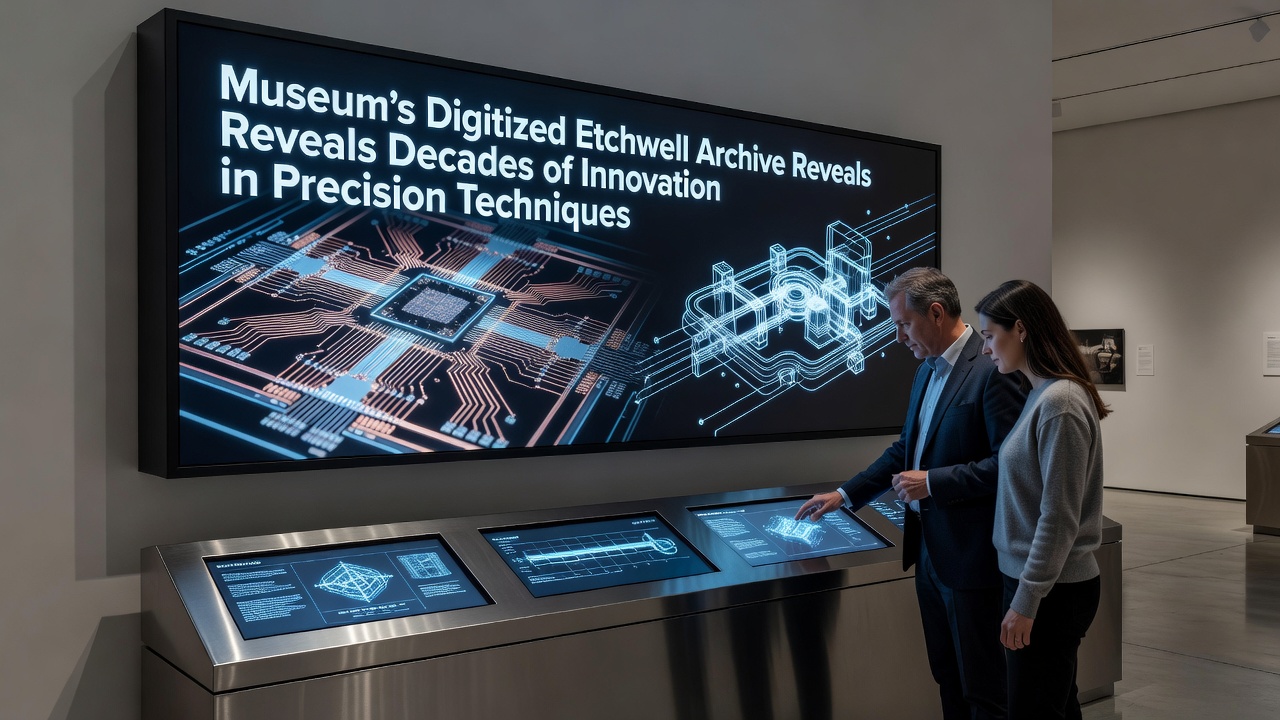
The recent digitization of the Etchwell Archive at the National Museum of Industrial Arts has opened access to records spanning more than seventy years of development in precision techniques, and researchers now examine these materials through high-resolution scans that capture every annotation and measurement note. Data from the project indicates over 12,000 individual documents have been processed since the initiative began, with completion targeted for October 2026 when full public access launches through the museum's online portal. Those who've studied similar collections observe that such digitization efforts transform how historical manufacturing methods reach contemporary engineers and historians alike.
Contents of the Digitized Collection
Archivists cataloged correspondence, technical drawings, and experimental logs that trace incremental advances in etching processes used across aerospace components, printed circuit boards, and specialized tooling, while the records show consistent refinement of tolerance levels from the 1950s onward. One study revealed that early entries documented manual alignment procedures that later gave way to optical measurement systems by the 1970s, and figures from the archive indicate error rates dropped by measurable margins each decade as new calibration standards emerged. Researchers discovered patterns where material testing logs referenced specific alloy compositions tested under varying chemical exposures, providing raw data that still informs current simulation models at several technical universities.
Key Innovations Documented Over Time
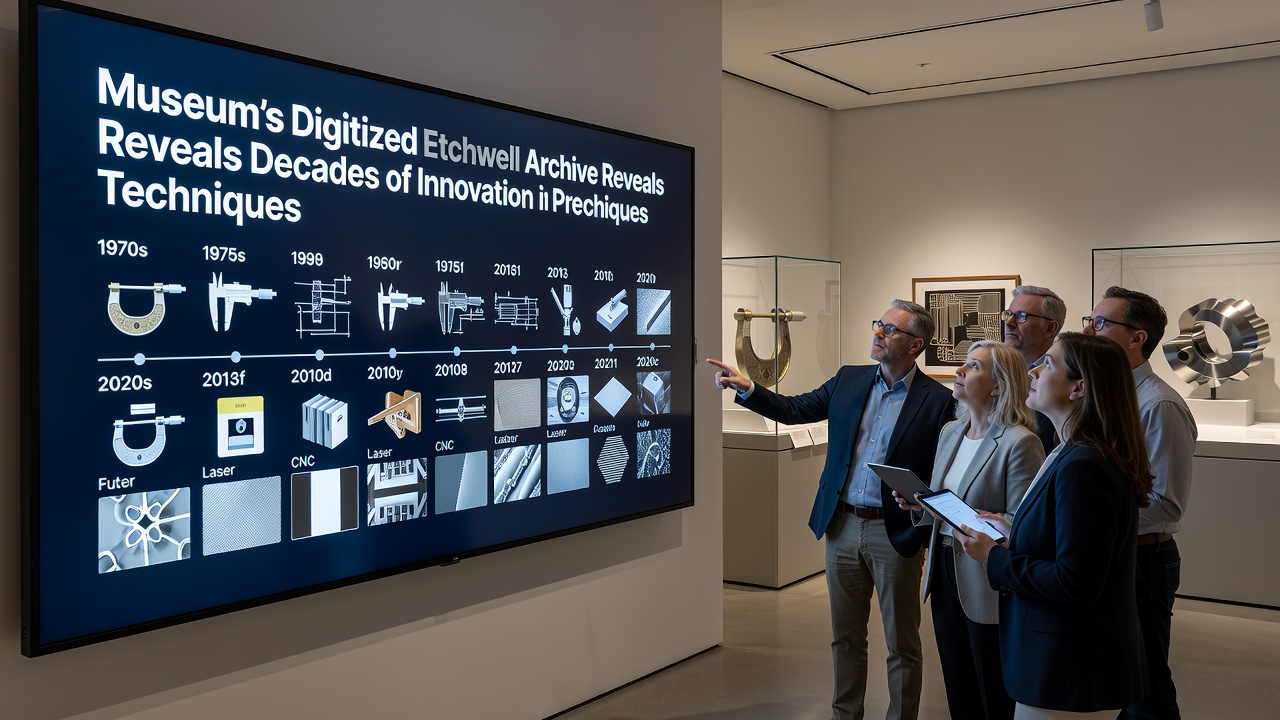
Entries from the 1960s detail the introduction of photoresist coatings that allowed finer line definitions on metal surfaces, and subsequent logs track how these coatings evolved through iterative adjustments to exposure times and developer solutions. According to cross-referenced entries, a 1984 internal report outlined early experiments with laser-guided etching heads that reduced manual intervention, and those findings later appeared in industry reports shared with European partners. The archive also contains batch records from production runs that list exact parameters for depth control and surface finish, offering concrete benchmarks that modern facilities still reference during process validation.
What's interesting is how the collection connects isolated experiments across different facilities, since notes from one site in the Midwest reference parallel work conducted at a partner lab on the West Coast, and the shared annotations reveal collaborative adjustments to mask alignment techniques. Data shows these exchanges accelerated adoption of computer-assisted design files by the early 1990s, replacing hand-drawn templates in many cases. Observers note that the digitized format now permits keyword searches across decades, surfacing connections that remained hidden in physical storage.
Access and Research Applications
Since the partial rollout of the digital platform, academic teams have downloaded more than 4,500 documents for projects examining historical tolerances in microfabrication, and a report from the Canadian Institute for Precision Manufacturing highlights how these records supplement existing datasets on surface metrology. The museum maintains usage logs that track downloads by region, with strong activity from institutions in Australia and the EU alongside North American users. External links appear in several entries pointing to supplementary patents, yet the core value lies in the primary measurements and test results preserved in sequence.
Training programs at technical colleges have begun incorporating selected archive images into coursework on quality control procedures, and instructors report that students gain direct exposure to how parameter changes affected final product specifications over successive iterations. The October 2026 full release is expected to include metadata tags that link related documents automatically, further streamlining comparative analysis across time periods.
Broader Context in Precision Manufacturing
Industry organizations such as the Precision Engineering Society have referenced the archive in recent workshops on process documentation standards, noting that the Etchwell records demonstrate consistent attention to traceability long before regulatory mandates required it. A 2023 review by the European Committee for Standardization cited similar historical collections as models for digital preservation projects now underway at multiple sites. Those who've examined the full timeline observe steady progression from analog measurement tools to integrated sensor arrays, with each transition documented through corresponding equipment logs and failure analysis reports.
The archive's structure itself reflects evolving record-keeping practices, since early volumes used bound ledgers while later sections adopted loose-leaf formats and eventually digital precursors in the form of microfiche summaries. This progression allows researchers to study not only the techniques but also the information management systems that supported them across generations of workers.
Conclusion
The digitized Etchwell Archive supplies verifiable primary sources that document sustained technical refinement in precision etching methods over seven decades, and its October 2026 public launch will expand opportunities for comparative studies across disciplines. Continued analysis of the collection will likely yield additional quantitative insights into how specific process variables influenced outcomes in controlled production environments.